

Planning for retirement often means exploring financial options that offer flexibility and peace of mind. For many homeowners, a reverse mortgage raises an important question early on — who owns the house in a reverse mortgage? Understanding ownership is essential before deciding whether this solution fits your long-term goals.
A Home Equity Conversion Mortgage (HECM), or reverse mortgage, allows eligible homeowners to utilize some of their home’s equity funds without having to move out of the property. These loans are insured by the Federal Housing Administration (FHA) and designed to support financial stability throughout retirement.
Yes, you do. One of the most common misconceptions is the belief that ownership transfers to the lender. In reality, homeowners retain the title to their property, just as they would with a traditional mortgage.
A reverse mortgage uses your home as collateral, not as surrendered property. You remain the legal owner and continue to benefit from any future appreciation. With that ownership comes responsibility, including paying property taxes, maintaining homeowners insurance and keeping the home in good condition.
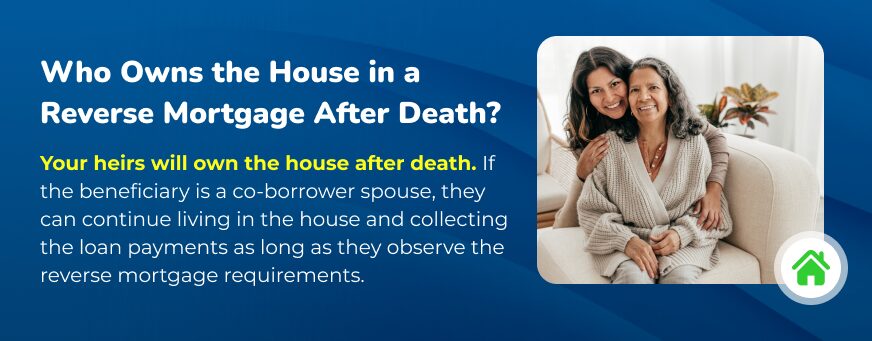
Another frequent concern involves heirs. When a homeowner passes away, reverse mortgage heirs do not automatically lose the property. Heirs are given up to 12 months time to decide how they want to proceed, and they are protected by the loan’s non-recourse structure.
If a surviving spouse is a co-borrower, they may continue living in the home as long as program obligations are met. Other heirs can choose to keep the home by paying off the loan balance, sell the property and retain all remaining equity in the home. Importantly, heirs are never personally responsible for any amount exceeding the home’s value – the reverse mortgage is a non-recourse loan.
A lender does not take ownership simply because a reverse mortgage exists. Ownership only changes if the loan’s terms are not met, such as failing to maintain the home or keep required expenses current. This process mirrors how traditional mortgages operate and reinforces that the homeowner remains in control.
Yes — because you own the home, you can sell it at any time. Sale proceeds are first used to repay the reverse mortgage balance, and any remaining equity belongs to you or your heirs. If the sale price does not cover the full balance, FHA insurance covers the difference.

At Senior Lending Corporation, education comes first. Every call is answered by a licensed advisor who partners with you from the initial conversation through closing. Clients choose us because we take the time to explain how reverse mortgages work, including ownership, heirs’ options, and long-term implications – clearly and patiently.
If you’re researching who owns the house in a reverse mortgage and want straightforward guidance, we’re here to help. Call 800-822-1190 or get in touch via our online form to learn how a reverse mortgage could support your retirement goals with clarity and confidence.